Imagine an 80-foot-long double-wide manufactured home over an unfinished basement, with heating and cooling registers in the floor. A duct cleaning company arrives, removes the grilles, and runs equipment into a few openings. How can the homeowner know whether the company actually cleaned the main trunks, the crossover, and the far ends—not just the areas near the registers?
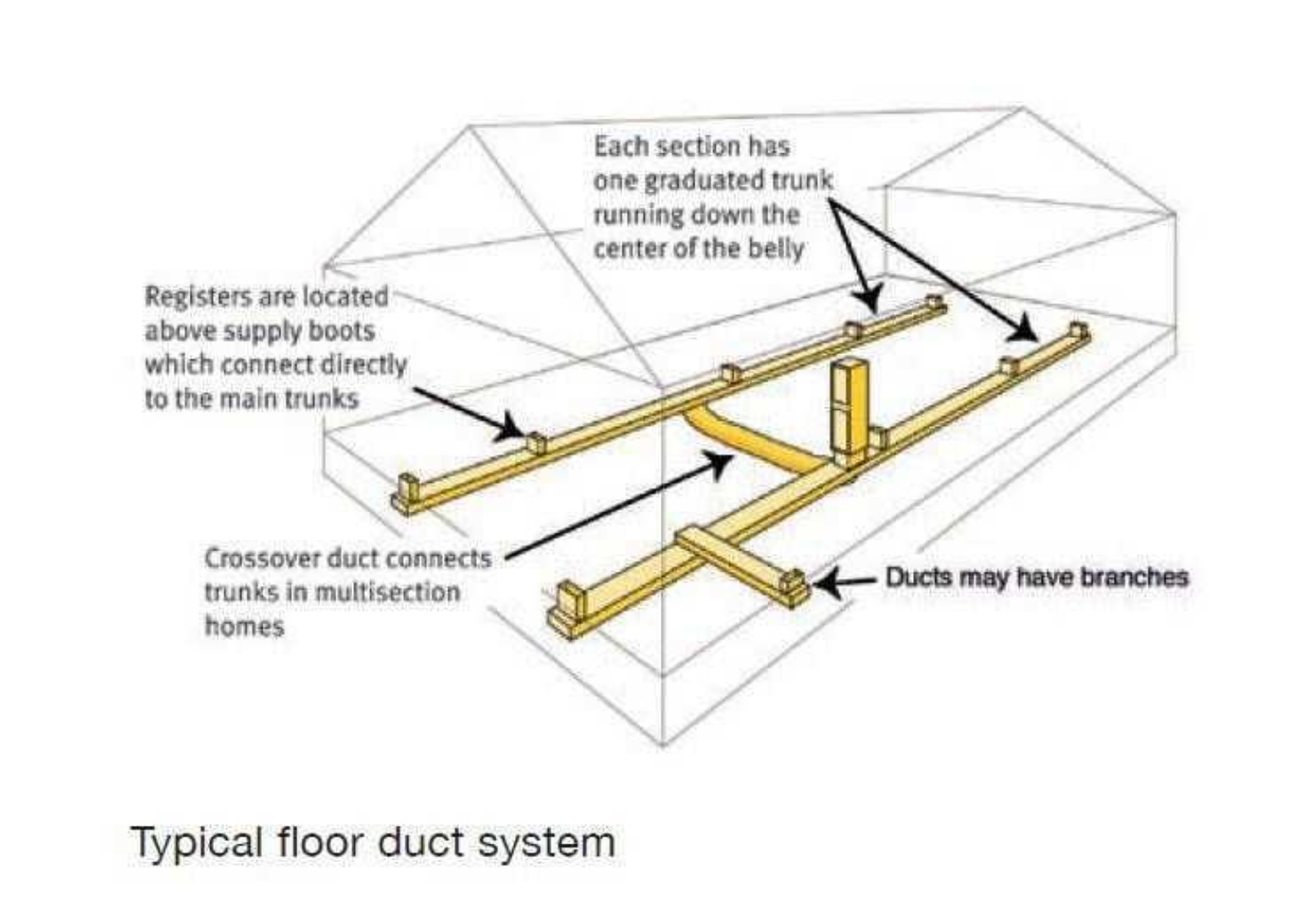
That is a fair question. A complete cleaning may be possible, but access, duct construction, equipment, and verification make all the difference. An 80-foot-long home does not necessarily have one continuous 80-foot trunk; many multi-section manufactured homes use separate longitudinal trunks connected by a crossover.
1. Start with an actual duct layout.
A contractor should identify each supply trunk, the crossover connection, boots and branches, and the return-air pathway. Unfinished basement access may help if the ductwork is exposed; a system enclosed inside the floor may be harder to reach.
2. Establish negative-air collection.
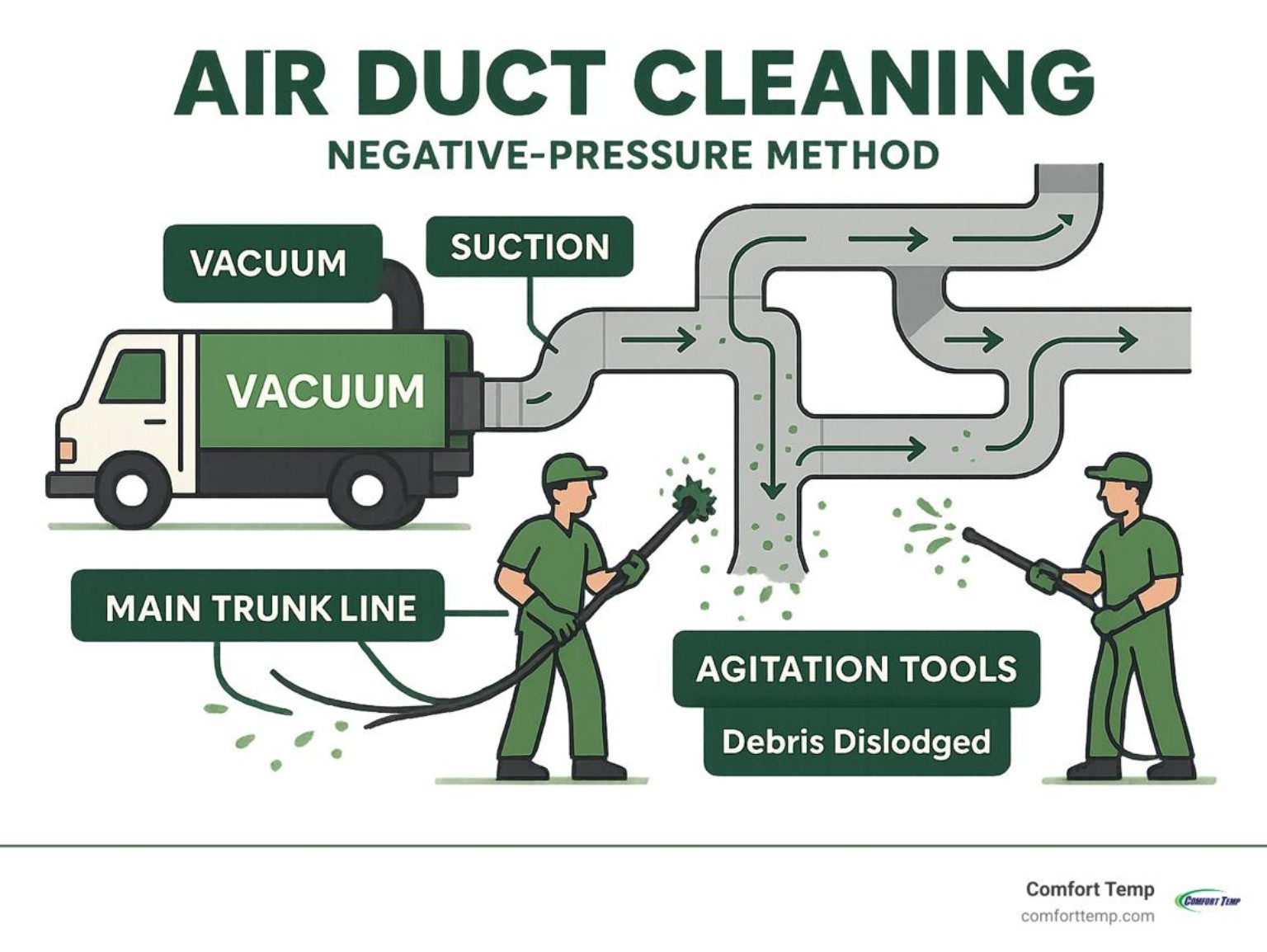
A professional crew can connect a high-volume vacuum to the trunk through suitable access, isolate sections as needed, and maintain airflow toward the collection equipment. Suction alone does not necessarily remove debris adhered to duct surfaces.
3. Loosen debris using appropriate tools.
Technicians may use air whips, compressed-air tools, or brushes to dislodge buildup, working through registers and strategically placed access openings. The method must be appropriate for the duct material: aggressive brushing can damage thin, flexible, or internally insulated ducts.
4. Reach the trunk ends and crossover.
On a long manufactured-home system, the company should explain how it will reach each section instead of assuming a hose inserted a few feet into every register constitutes a whole-system cleaning.
5. Clean more than floor grilles.
A complete scope should identify the supply and return duct paths and accessible components that are included. Register and boot cleaning alone should not be described as cleaning the entire duct system.
6. Verify and close access openings.
Ask for inspection photos or video from representative trunk sections, the crossover, and far ends. Any access panels created during the job must be securely resealed to avoid duct leakage.
Is duct cleaning necessary in the first place? The U.S. Environmental Protection Agency does not recommend routine air duct cleaning for every home. It suggests considering cleaning when there is substantial visible mold growth on hard duct surfaces, vermin infestation, or excessive dust and debris visibly released from supply registers. Conditions and underlying causes should be professionally assessed rather than relying on scare tactics.
For many homeowners, money may be better directed first toward correctly fitted filtration, blower-wheel and coil maintenance when needed, duct sealing, correcting airflow problems, and routine HVAC maintenance. These steps can address known comfort and performance issues without assuming the ducts must be cleaned.
Before paying for duct cleaning, ask these five questions: How will you access and clean every main trunk? Will the crossover and return ducts be included? Which agitation tools fit my duct material? What before-and-after evidence will you provide? What exactly does the written price include?
Our approach at HHC Heating & Cooling is education first. We believe homeowners deserve an explanation of what the equipment and ductwork actually need—not a promise that every home requires an expensive cleaning.
References: U.S. Environmental Protection Agency, 'Should You Have the Air Ducts in Your Home Cleaned?' (epa.gov/indoor-air-quality-iaq/should-you-have-air-ducts-your-home-cleaned); National Air Duct Cleaners Association, ACR Standard for Assessment, Cleaning & Restoration of HVAC Systems.
HHC Heating & Cooling — Creating Smiles one home at a time. Serving Lafayette, West Lafayette, and nearby Indiana communities. Learn more at https://hhcheatingandcooling.com.
See how the ductwork and cleaning equipment connect
These educational illustrations show a typical manufactured-home floor duct arrangement and a simplified negative-pressure cleaning process. Every actual system and cleaning setup is different.
For help beyond these tips, explore our heating and cooling services or request an HVAC assessment.
Thanks for reading. Check back with our family for more practical ideas to help care for your home.