Your thermostat says the room has reached temperature, the burners shut off—and the furnace blower keeps going. Is something wrong? Not necessarily. Many forced-air furnaces intentionally move air for a short period after the heat source shuts off. A few useful observations can help distinguish ordinary operation from a possible service issue.
1. A short cool-down may be normal.
The blower often continues briefly to move residual heat from the heat exchanger and supply ducts. The exact duration is controlled by equipment design and settings, so there is no single fan-off time that applies to every furnace. If the blower stops on its own and the house stays comfortable, that behavior may be expected.
2. Check the thermostat fan selection without changing wiring or equipment panels.
A fan setting of ON can make the indoor blower run continuously even when the thermostat is not calling for heat. AUTO generally allows the system's controls to decide when to run the fan. Some systems also have a circulation setting that periodically runs the blower; consult your thermostat's own instructions.
3. Notice whether the air is warm, room-temperature or persistently cold.
Air gradually cooling during a normal post-heat run differs from a blower that runs indefinitely while the furnace never produces heat. Write down the displayed thermostat mode, the approximate start and stop pattern, and any diagnostic message visible without removing covers.
4. Persistent operation deserves an assessment.
A stuck relay, a control problem or an overheating safety response can keep a blower on in some systems. A dirty filter or restricted airflow may contribute to overheating, but the running fan alone does not identify the cause. Repeatedly resetting power or bypassing a safety switch is not a safe diagnostic method.
5. Know when to stop observing.
A burning smell, smoke, sparking or a carbon monoxide alarm requires immediate safety action, not more thermostat experiments. Follow the alarm instructions, move to fresh air and contact emergency responders when a carbon monoxide alarm activates. Never open a gas or electrical equipment cabinet for homeowner troubleshooting.
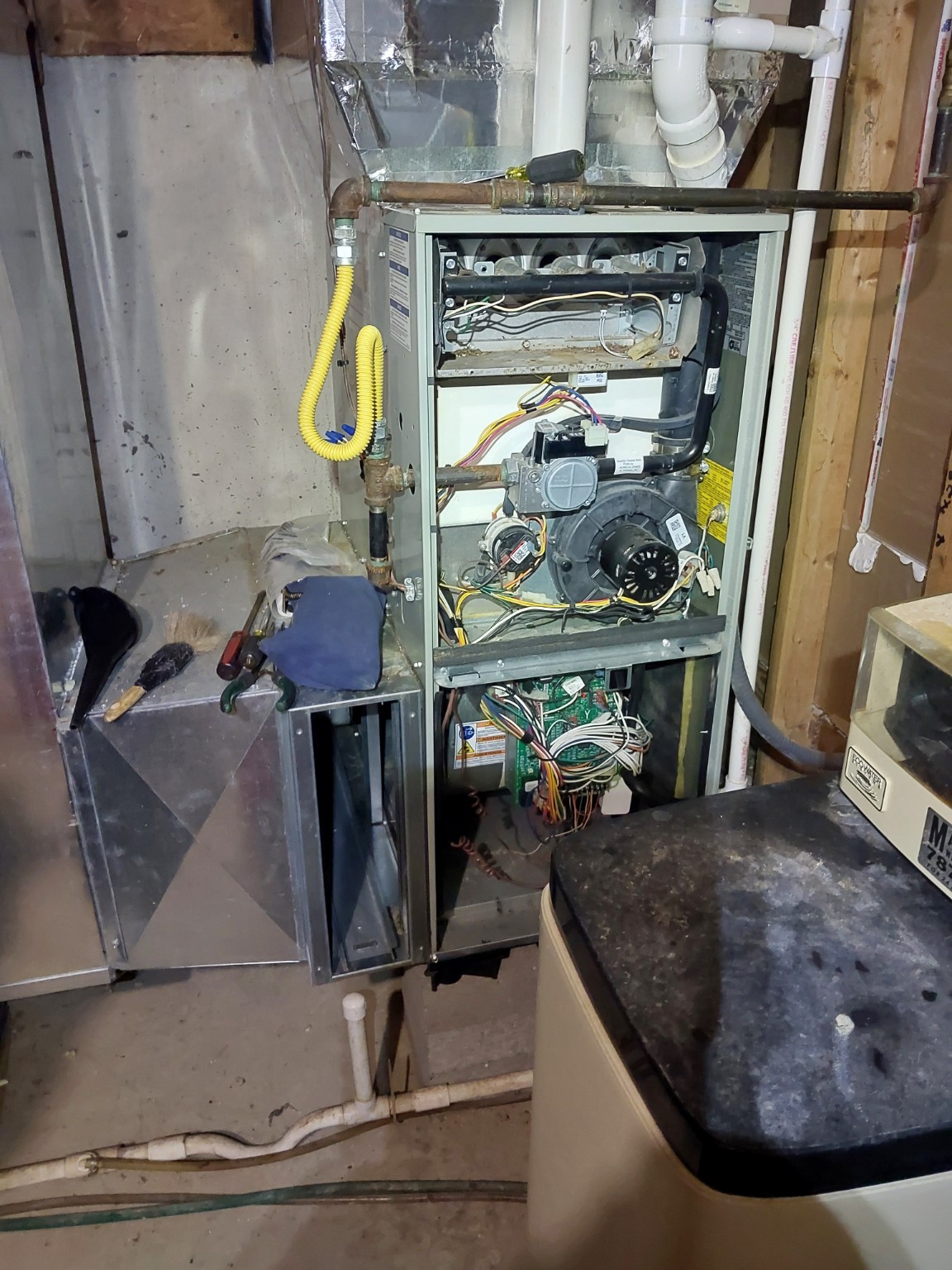
If the fan runs far longer than your system normally does, if heat is unreliable or if a fault repeats, request furnace service. Learn more about HHC's heating and cooling services before scheduling an evaluation. The accompanying image is genuine HHC furnace equipment photography, not evidence of a particular fan diagnosis.
For help beyond these tips, explore our heating and cooling services or request an HVAC assessment.
Thanks for reading. Check back with our family for more practical ideas to help care for your home.