You raise the thermostat, hear the furnace begin to run, and then notice that warm air does not come from the vents immediately. That brief pause can be perfectly normal on many forced-air gas furnaces. Different models follow different control sequences, so the important question is whether the system completes its normal heating cycle reliably.
First comes the call for heat. On a typical modern gas furnace, the controls begin safety checks and may run a small draft-inducer motor before ignition. Electronic ignition and flame-proving steps follow according to the equipment design. This is not the same thing as the large circulating blower moving air through the house.
Next, the furnace may deliberately delay its circulating blower. Waiting allows the heat exchanger to warm before sending air through supply registers. Some equipment also runs the blower briefly after the burners stop to carry remaining heat into the home. Exact timing is model-specific; do not judge a furnace by a single universal number of seconds.
Listen for a consistent pattern over several normal cycles, without opening the cabinet. A short startup delay followed by steady warm airflow is different from a system that attempts ignition repeatedly, stops without heating, or blows cool air through much of a heating call. Write down which symptom you notice and whether the thermostat eventually reaches its setting.
Check only ordinary homeowner items: confirm the thermostat is in HEAT mode, make sure supply registers are not obstructed by furniture, and check the air filter according to the manufacturer's directions. Do not bypass a door switch, safety control, pressure switch or limit switch to make a system run.
If the furnace repeatedly stops, makes unfamiliar booming or scraping noises, or heats inconsistently, arrange furnace service. A technician may need to evaluate ignition, flame sensing, venting, controls and airflow rather than guessing which part failed from the sound alone.
Safety comes first. If you smell gas, leave the building and contact your gas utility or emergency services from outside. If a carbon-monoxide alarm sounds or someone develops symptoms of possible exposure, go outside immediately and call emergency services. Never use a gas oven to heat the house.
Understanding the startup sequence can make heating and cooling conversations much clearer. HHC Heating & Cooling serves the greater Lafayette area; describe what the furnace does, not just whether the fan is spinning. This helps make a service request more useful without promising a diagnosis by phone.
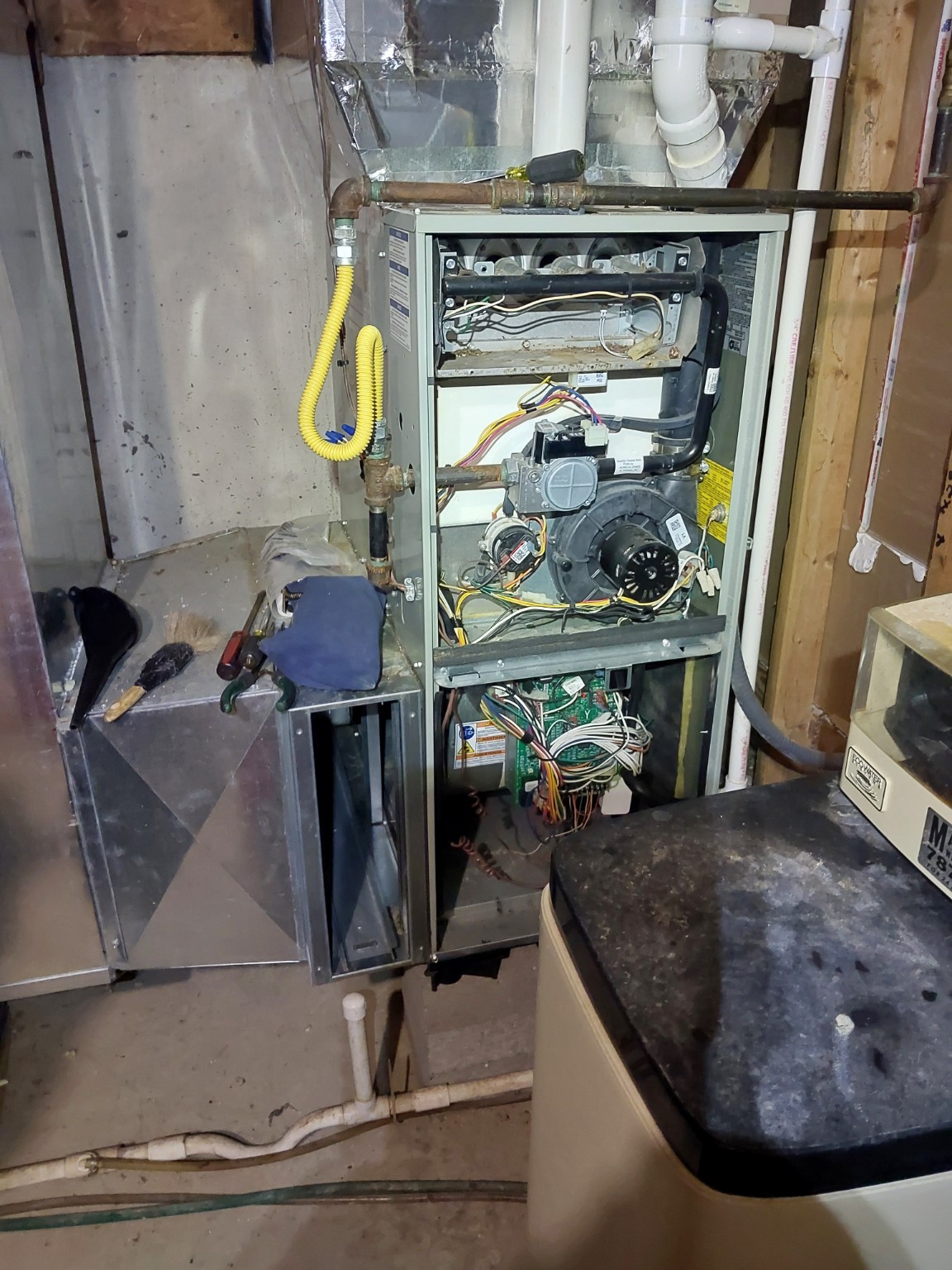
Photo note: The cover is a genuine HHC furnace field photograph, shown for education only; it does not represent a completed repair or establish the cause of another home's symptoms.
For help beyond these tips, explore our heating and cooling services or request an HVAC assessment.
Thanks for reading. Check back with our family for more practical ideas to help care for your home.