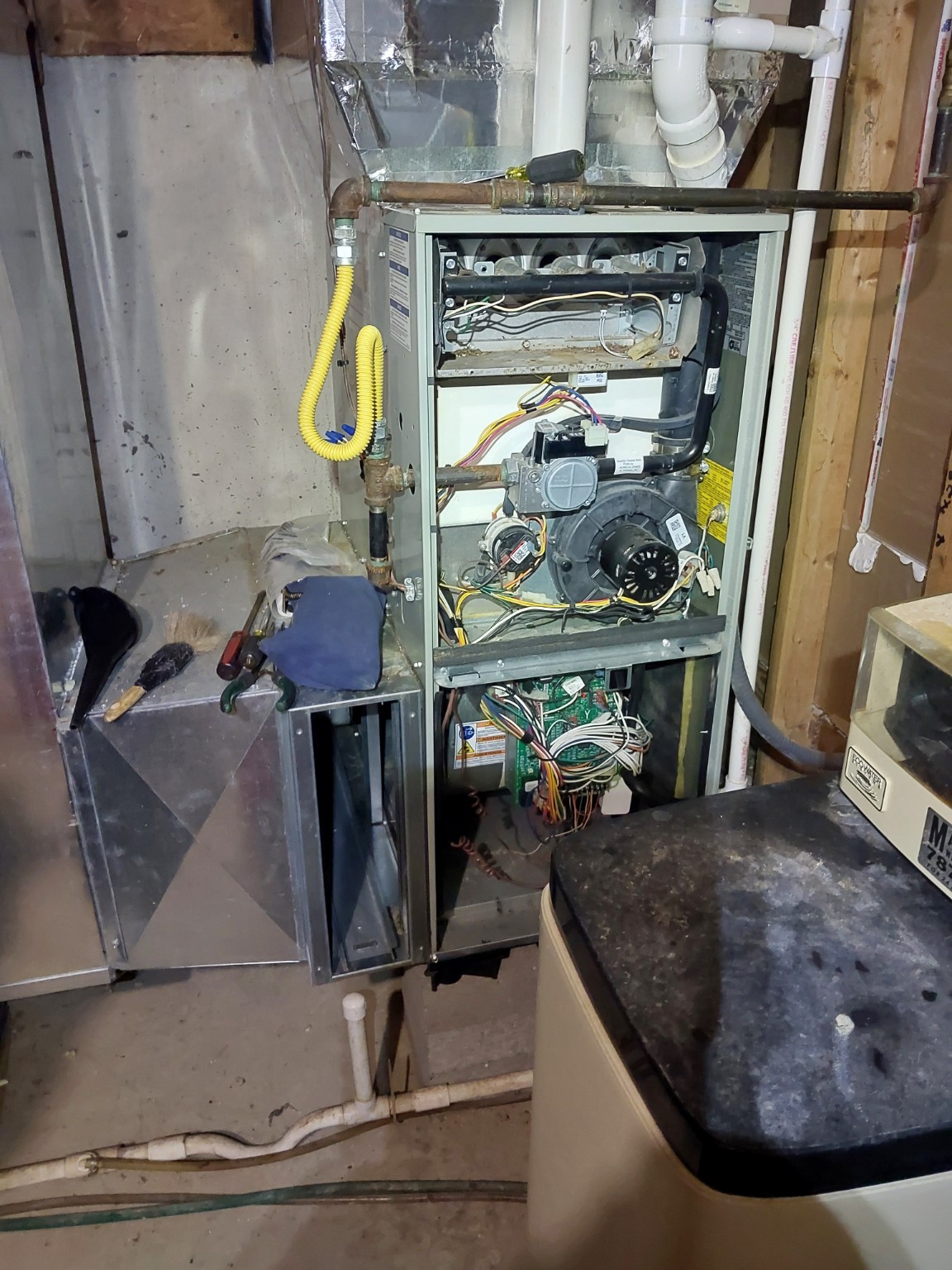
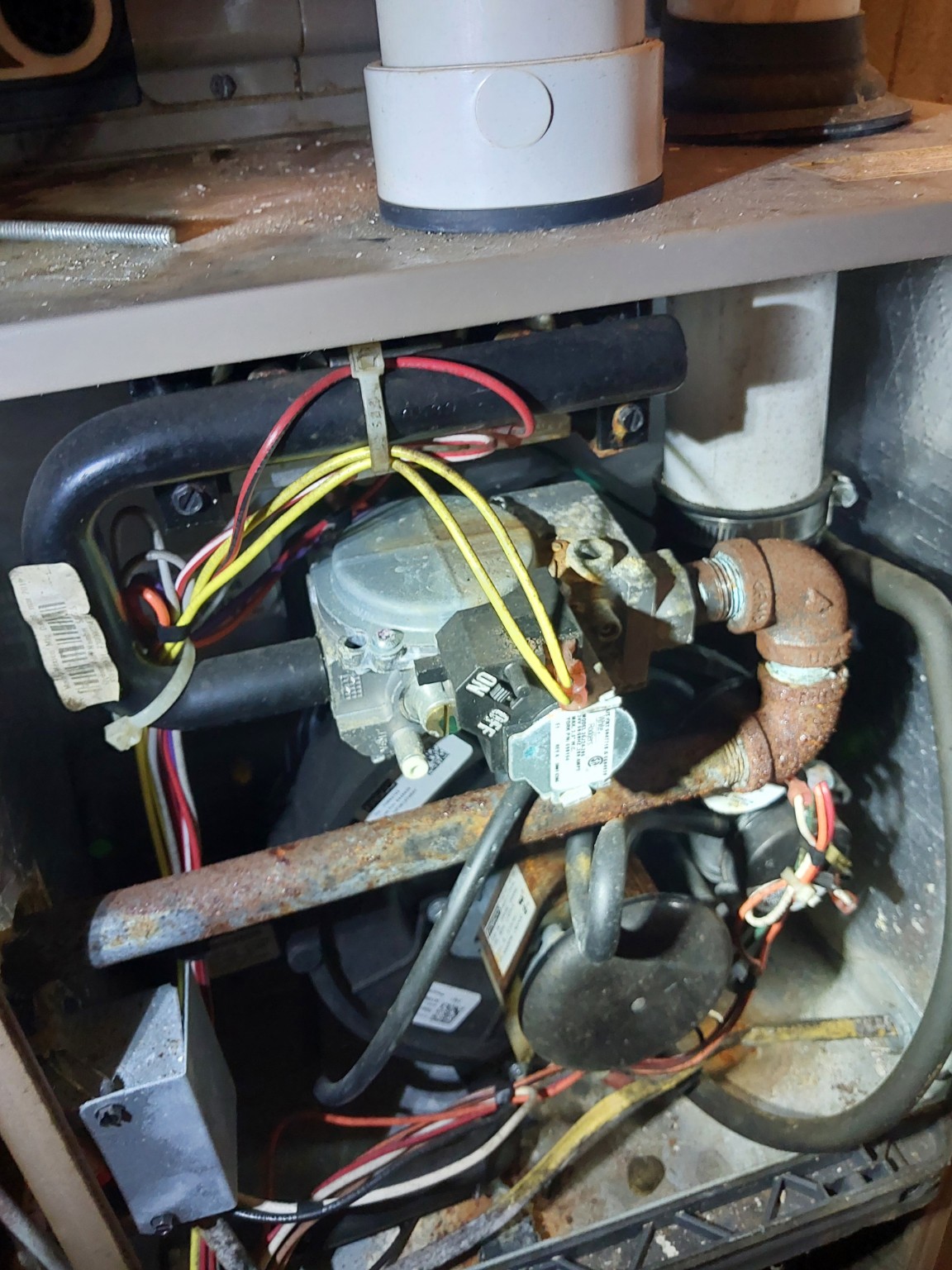
A patch of rust inside a furnace can be unsettling, especially when Thanksgiving guests are coming. Corrosion can be a clue that moisture has been present, but a photograph—or the color of a single component—cannot tell you where the moisture came from, when it happened or whether the furnace is safe to keep running.
1. Start with what you can see without taking equipment apart.
Look for fresh water on the floor nearby, recurring drips, an unusual odor or new staining around accessible areas. Keep children and stored items away from the appliance. Never remove sealed combustion panels or put hands near energized or gas components just to inspect rust.
2. Understand that corrosion has more than one possible explanation.
Age, damp surroundings, past condensation, venting problems and water entering from elsewhere may leave similar-looking marks. Some high-efficiency furnaces intentionally produce condensate, but that water should follow the system's designed drainage path. A rusty pipe does not identify a failed part by itself.
3. Recognize the urgent exceptions.
If you smell gas, leave the area without operating switches and contact your gas utility or emergency services from a safe location. If a carbon-monoxide alarm sounds or someone has symptoms such as headache and dizziness, move to fresh air and contact emergency services. Do not keep resetting a furnace that trips safety controls.
4. A technician has to find the cause, not polish the symptom.
Proper furnace service may include checking visible venting and condensate components where applicable, drainage, operating condition, combustion-related safety and the equipment manufacturer's instructions. Scrubbing or spraying rusty internal parts is not a substitute for diagnosis.
5. Keep a simple observation record.
Note when you first noticed staining, whether there was actual water, any thermostat message and whether heating performance changed. Clear facts help a professional plan the visit without guessing at a replacement part from a picture.
Our heating and cooling service covers homeowner concerns around heating reliability in Lafayette, West Lafayette and nearby communities. Request an assessment when corrosion is worsening, unexplained moisture appears or the equipment repeatedly acts abnormally.
Photo note: this is an authentic HHC field photograph of furnace components with visible corrosion. The image does not prove a particular fault, unsafe heat exchanger or completed repair.
For help beyond these tips, explore our heating and cooling services or request an HVAC assessment.
Thanks for reading. Check back with our family for more practical ideas to help care for your home.