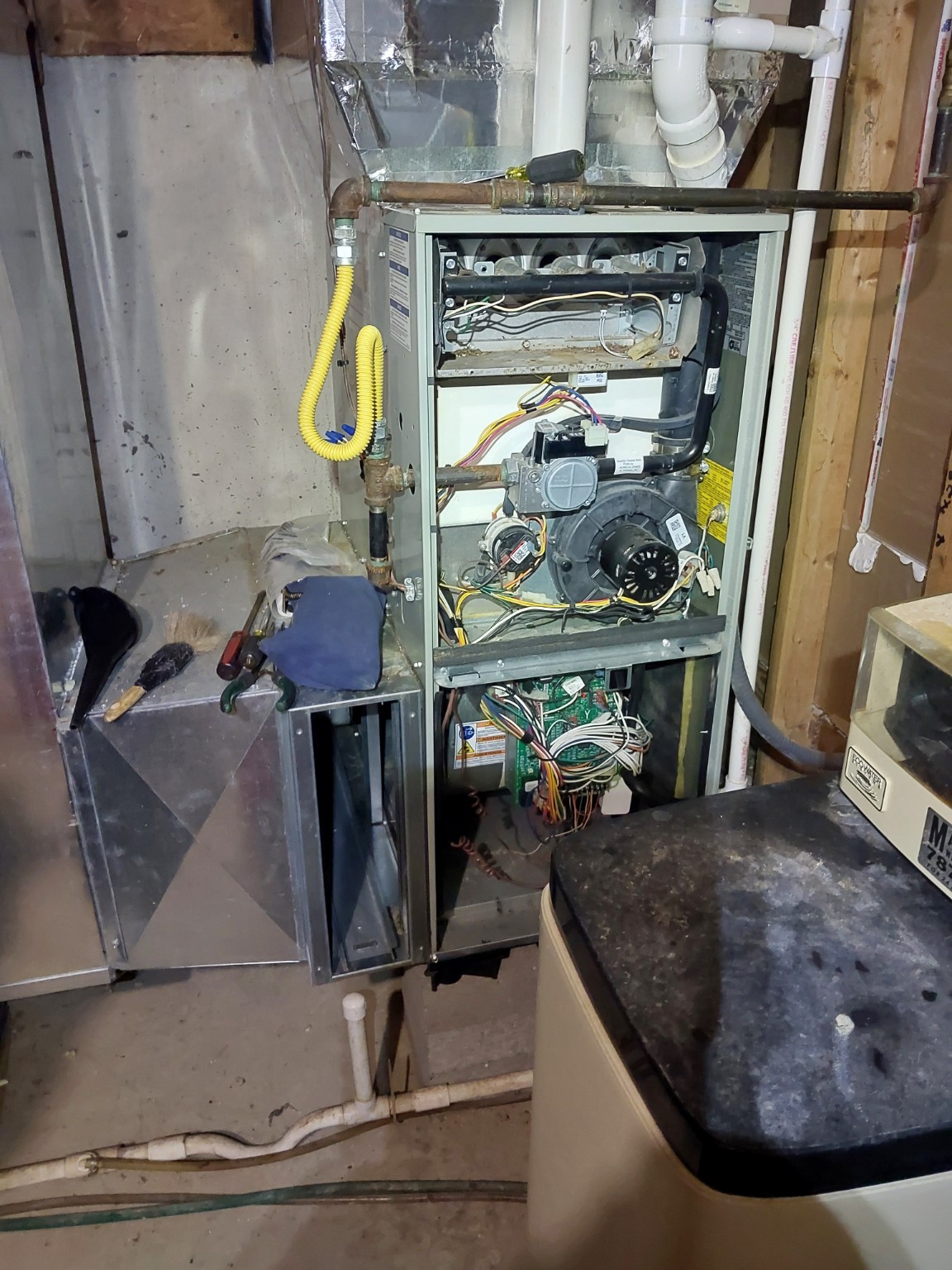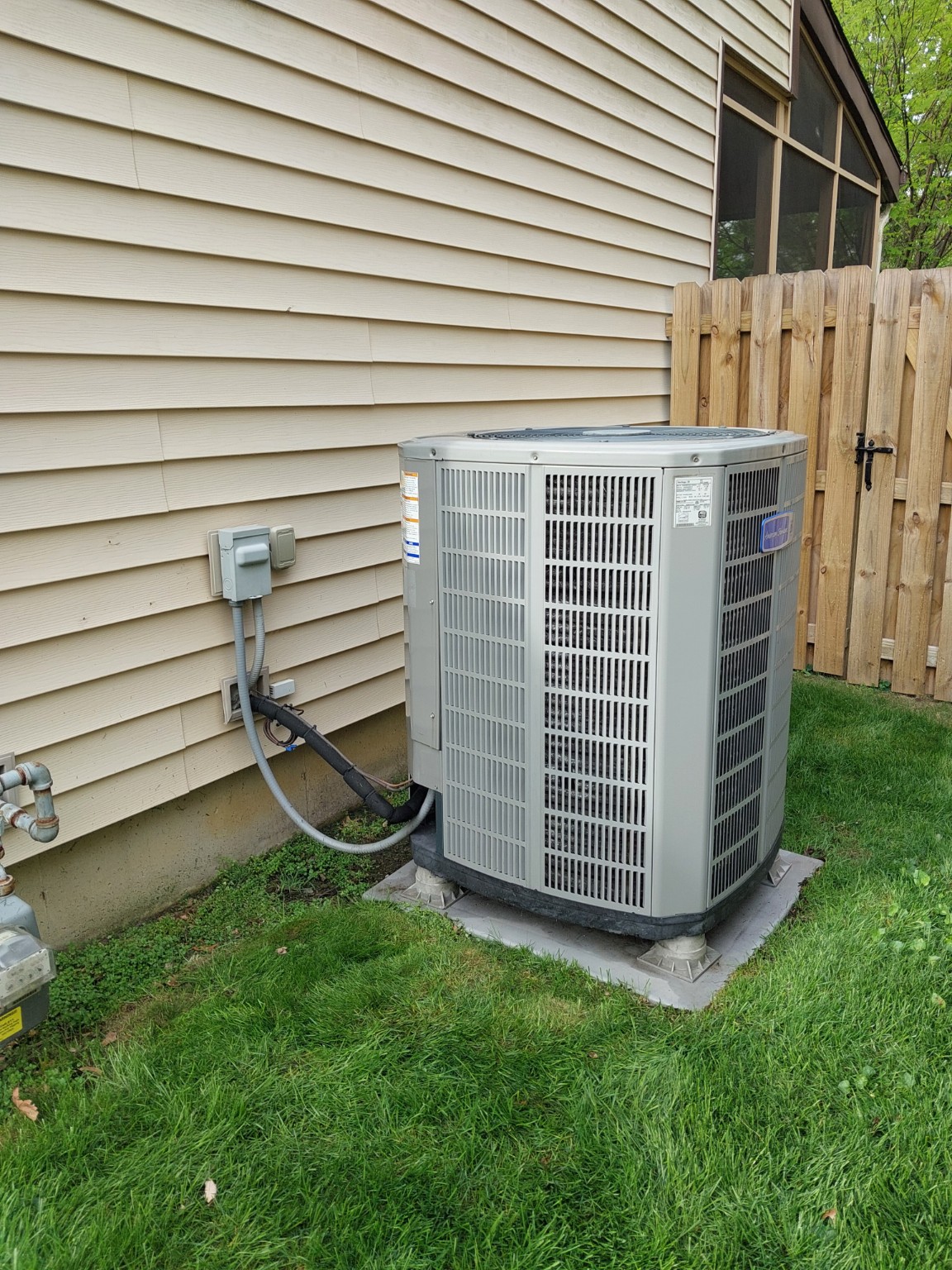
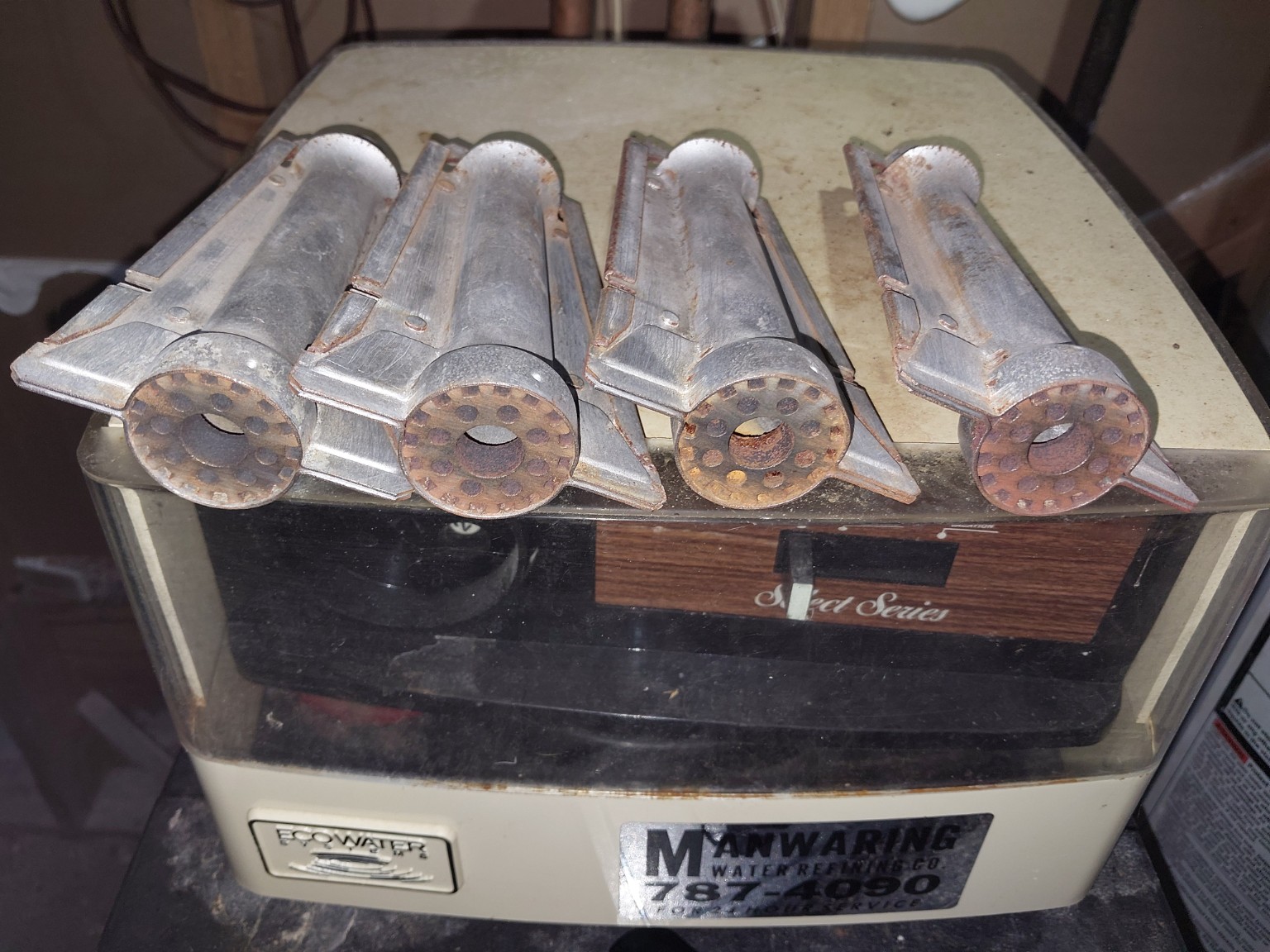
A recent HHC Heating & Cooling service visit to a high-efficiency (approximately 90%) gas furnace uncovered more than one concern. This real field visit involved rusted burners, a reported moisture issue associated with the fresh-air setup, a faulty limit switch, a condensate drain that was not draining properly, and flexible supply duct damaged by rodent activity. The photographs are from the actual equipment inspection, not a staged demonstration.
1. Burner corrosion deserves a closer inspection.
The removed metal burners showed clear rust and corrosion. Rust is evidence of exposure to moisture or another corrosive environment, but a photograph alone cannot establish the source, operating safety, or whether replacement is required. A trained technician should inspect the burner assembly and surrounding components, follow manufacturer requirements, and verify safe combustion after any repairs.
2. A high-efficiency furnace has to manage condensate correctly.
Condensing furnaces intentionally remove heat from exhaust gases and generate acidic condensate that must drain through the designed piping and trap. On this visit the drain was not draining properly, and moisture concerns were also found around the fresh-air arrangement. Both conditions warrant evaluation of the full intake, exhaust, condensate and venting system rather than treating rust as an isolated cosmetic problem.
3. A faulty limit switch is a safety concern.
The technician identified a bad limit switch during service. Limit devices are safety controls; they must not be bypassed or assumed to be the root cause of overheating. Qualified service includes checking the correct part and evaluating airflow, temperature rise and operating conditions against the furnace manufacturer's specifications.
4. Rodents can damage hidden supply ductwork.
Flexible duct material in the supply system had been damaged by rodent activity and needed repair. Duct damage can lead to lost conditioned air, reduced comfort and possible contamination. Damaged runs should be inspected and repaired or replaced appropriately, and likely animal entry points addressed so the problem does not recur.
5. The bigger lesson is to look at the whole heating system.
A furnace can have several related issues at the same time. A proper furnace service visit considers combustion, air movement, drainage, venting, controls and connected ductwork. For help with furnace service and broader heating and cooling concerns, HHC Heating & Cooling serves Lafayette, West Lafayette and nearby communities within approximately 30 minutes.
These photographs document observations during an actual HHC service visit. They do not, by themselves, document the final test readings, prove every repair was completed, or certify that the system is safe to operate. If your furnace short-cycles, leaks, shows repeated faults or has signs of corrosion, arrange a professional inspection. Do not bypass a safety switch or operate equipment you suspect to be unsafe.
For help beyond these tips, explore our heating and cooling services or request an HVAC assessment.
Thanks for reading. Check back with our family for more practical ideas to help care for your home.