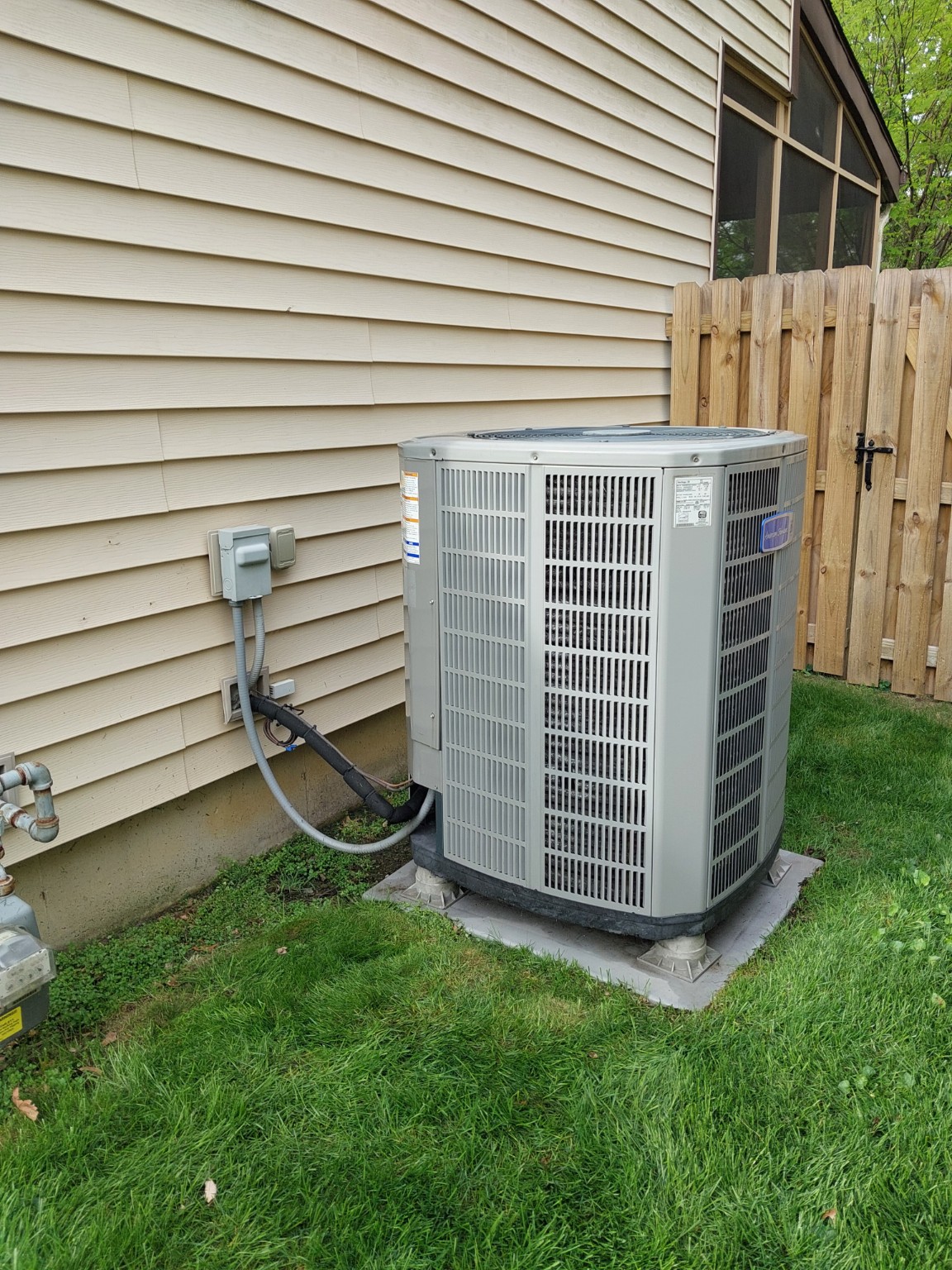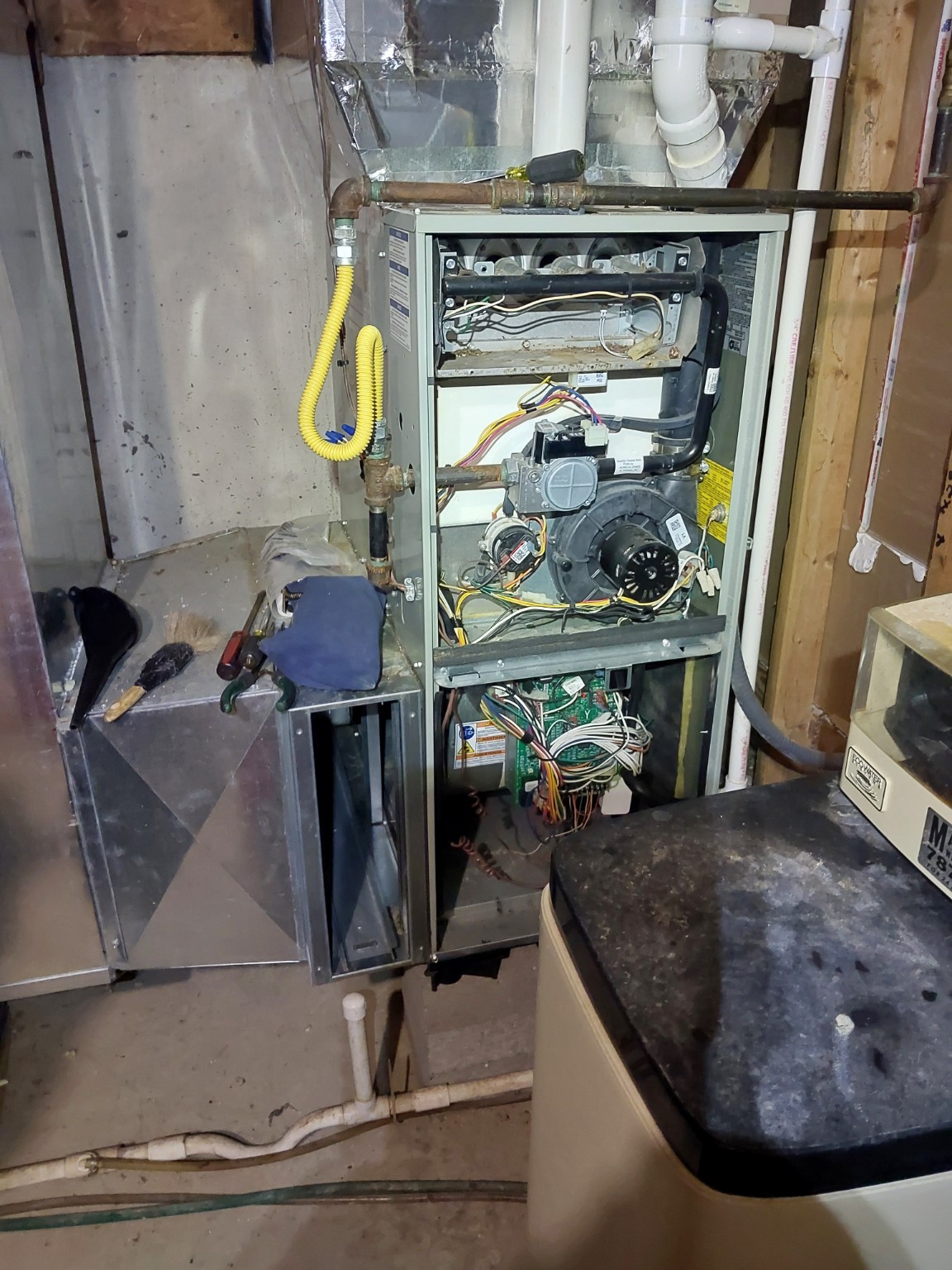
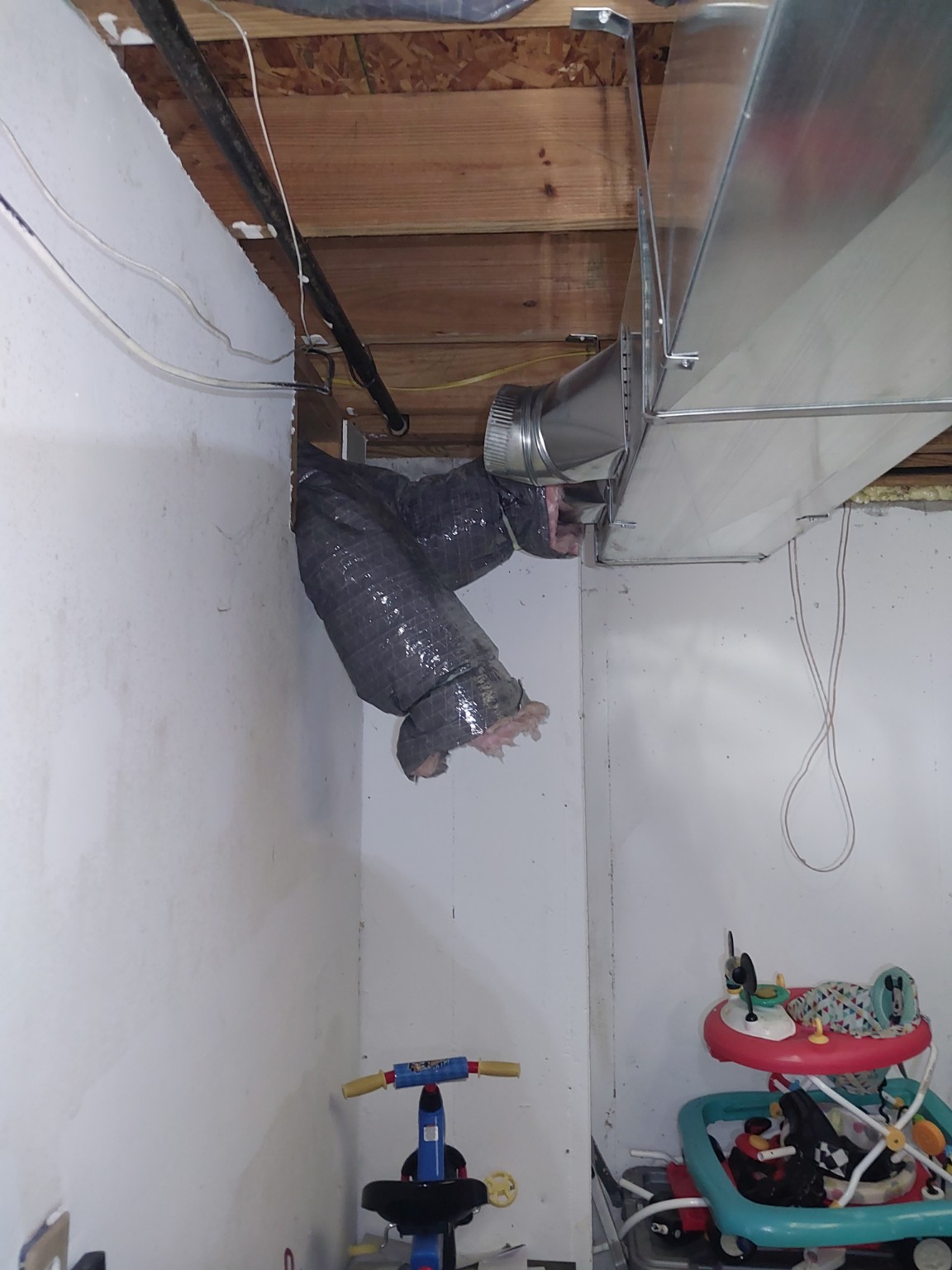
When the furnace is running but one room stays cold, it's easy to blame the thermostat. Sometimes the problem is farther along the air path: a disconnected, crushed, torn, or poorly supported flexible supply duct. Damaged duct covering can expose insulation; an actual breach in the inner air passage can also waste conditioned air. Those are different problems that need an inspection to distinguish.
1. Compare rooms without opening equipment.
Notice whether a particular room receives noticeably less airflow than others when the heating system is operating normally. A closed register, blocked return, or dirty filter can produce similar symptoms, so an uneven room isn't proof of duct damage.
2. Look only where it is safe and accessible.
From a finished, well-lit area, a homeowner might notice a loose duct connection, a hanging run, or torn insulation covering. Don't enter an unsafe attic or crawlspace, disturb insulation, touch exposed wiring, or handle animal droppings. If there are signs of pests, keep away from contaminated materials and contact an appropriate professional.
3. Treat damaged insulation and air leaks separately.
A torn outer jacket is not automatically a torn inner liner. Conversely, duct air leaking into an unconditioned space may affect comfort and energy use. The right repair depends on which layers are damaged and whether the duct is properly connected and supported.
4. Don't improvise with household tape.
Ordinary tape, crushed bends, and unsupported patches are not durable substitutes for a proper duct evaluation. If a duct is damaged near electrical, gas, or furnace components, leave the equipment undisturbed and request a qualified inspection.
5. Write down what changed.
Record the room, whether the thermostat is satisfied, and whether you noticed unusual sounds or weak airflow. These observations help during furnace service and can keep troubleshooting focused.
An HVAC technician can assess the duct condition alongside the rest of the home comfort system. The HHC photograph here shows authentic damaged flexible duct observed during field work; it is not a claim that all airflow complaints come from animal activity or that an illustrated repair is complete.
Safety reminder: If you smell gas, follow your utility's emergency instructions and leave the area. For possible carbon monoxide exposure, get outside and call emergency services; duct appearance alone cannot establish combustion safety.
For help beyond these tips, explore our heating and cooling services or request an HVAC assessment.
Thanks for reading. Check back with our family for more practical ideas to help care for your home.