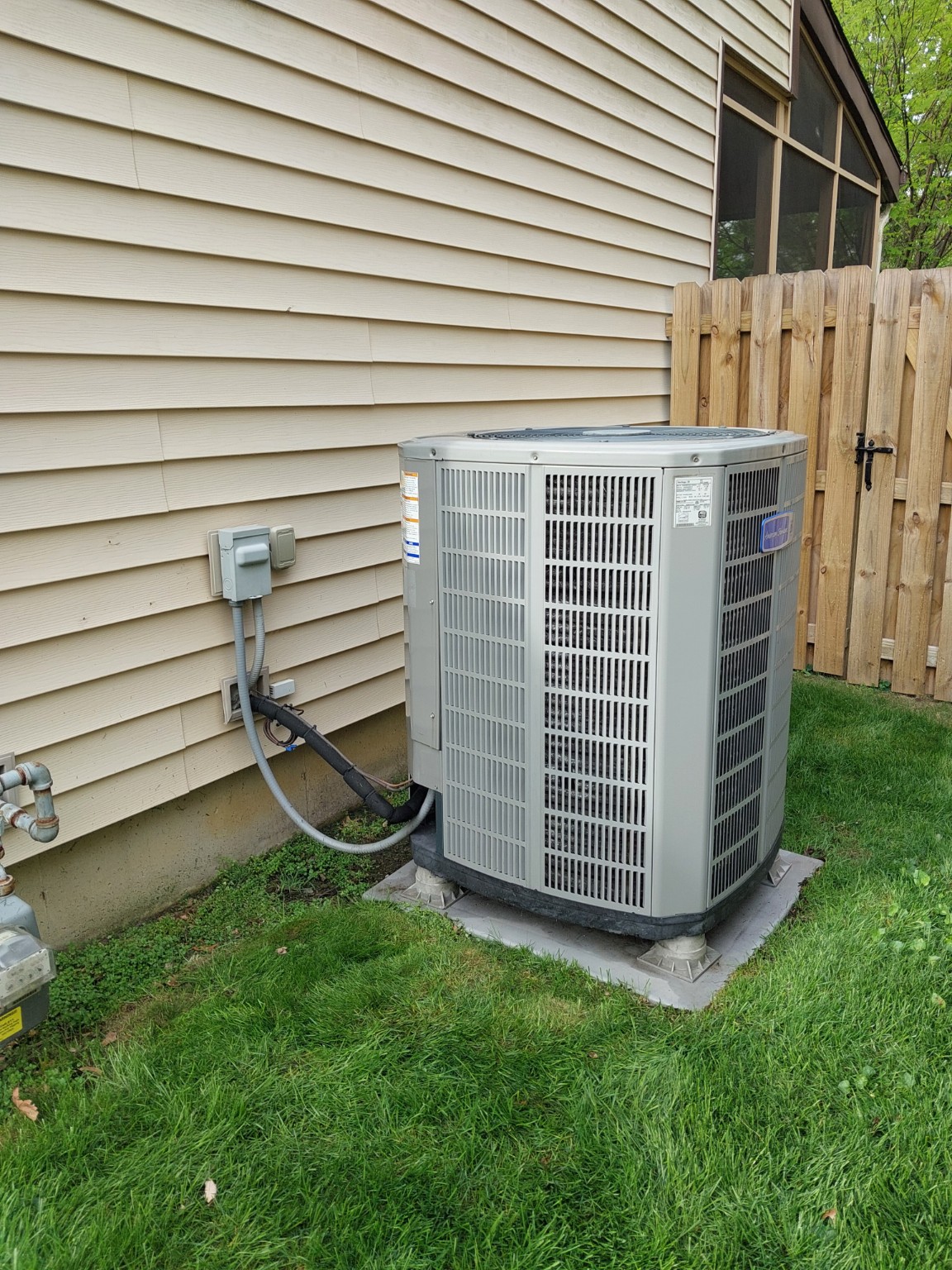
A heat pump needs open air around its outdoor unit even when it is heating your home. In Greater Lafayette, falling leaves, windblown debris and eventual snowfall can change the area around the equipment quickly. A short visual check from the ground is a useful seasonal habit, but it is not a substitute for professional service.
1. Look for loose leaves and yard debris.
Check whether piles have formed against the cabinet or near the fan and coil openings. When the system is off and it is safe to do so, pick up loose debris from the ground around the unit. Do not push fingers, tools or a hose into the equipment.
2. Give the unit breathing room.
Avoid storing bins, tarps, furniture, firewood or holiday decorations directly against it. Exact clearance requirements depend on the make, model and installation; follow the manufacturer's instructions rather than relying on a universal distance quoted online.
3. Watch where roof runoff and snow may land.
Water dripping from an eave can refreeze near outdoor equipment. If snow collects around the unit, clear it carefully from surrounding ground without striking the cabinet, bending fins or scraping ice from the coil. Never pour boiling water on the unit or chip at frozen components.
4. Recognize that a little frost can be normal.
During cool damp weather, a heat pump may periodically enter defrost. A temporary pause in the outdoor fan or visible vapor is not automatically a failure. Thick ice that persists, repeated trouble maintaining indoor temperature or unusual noises should be reported to a qualified technician.
5. Keep the indoor side in mind.
A clear return-air path and a filter maintained according to the equipment instructions also matter for home comfort. Do not block supply registers or alter fan wiring, refrigerant lines or safety controls to try to improve heat output.
If you notice burning smells, damaged wiring, a loudly vibrating unit or equipment that appears unsafe, stop using it and seek qualified service. If you suspect an electrical or gas emergency, follow the appropriate emergency procedure instead of trying to troubleshoot.
When you request heat pump service, describe what you observed, when the issue happens and whether the thermostat is calling for heat. Photographs taken from a safe distance may be helpful. HHC Heating & Cooling can discuss heating and cooling service and seasonal checks for local homes without promising a diagnosis from a photo alone.
For help beyond these tips, explore our heating and cooling services or request an HVAC assessment.
Thanks for reading. Check back with our family for more practical ideas to help care for your home.