Your thermostat says HEAT, the fan is running, and the air at a register feels cool. That does not automatically tell you which furnace component has failed. The first useful step is to notice whether the cool air lasts only briefly or continues while the house temperature falls.
1. Check the thermostat mode and fan setting.
Confirm the system is set to HEAT and the temperature is above the actual room reading. On many thermostats, a fan set to ON keeps moving air between heating cycles, so some air may feel cooler even when the furnace is not actively heating. AUTO usually runs the blower according to the equipment controls.
2. Allow for a normal transition, but watch the room temperature.
Some systems move air during startup or after burners shut off. A short period of air that feels cooler than expected is different from extended airflow with no useful heating. Write down whether the displayed room temperature is rising, steady or dropping.
3. Inspect only the accessible filter and vents.
A loaded filter or blocked return can restrict airflow and contribute to heating trouble. Follow the furnace manufacturer's directions to check or replace an accessible filter of the specified size and type. Keep supply registers and return grilles clear; do not open combustion compartments or remove safety panels.
4. Notice the pattern without repeated resets.
Does the furnace try to start, shut off and try again? Is the thermostat calling for heat while no warm air arrives? Ignition, fuel delivery, safety controls, airflow and other conditions can produce similar symptoms. Repeated power cycling or bypassing a safety switch can obscure the fault and is not a safe substitute for diagnosis.
5. Treat unusual smells and alarms seriously.
If you smell natural gas, leave the building, avoid electrical switches and contact the gas utility or emergency services from a safe location. If a carbon monoxide alarm sounds or occupants experience possible CO exposure, get outside and call emergency services. Do not try to diagnose combustion safety from register temperature.
6. Give the technician clear observations.
Note the thermostat mode, fan setting, whether warm air ever appeared, whether more than one room is affected, and any visible error code without opening equipment. Furnace service should identify the actual fault before repairs are proposed.
For broader comfort questions, our heating and cooling services cover seasonal care and troubleshooting for local homes. HHC Heating & Cooling serves Lafayette, West Lafayette and surrounding communities within approximately 30 minutes; service availability must be confirmed when you inquire.
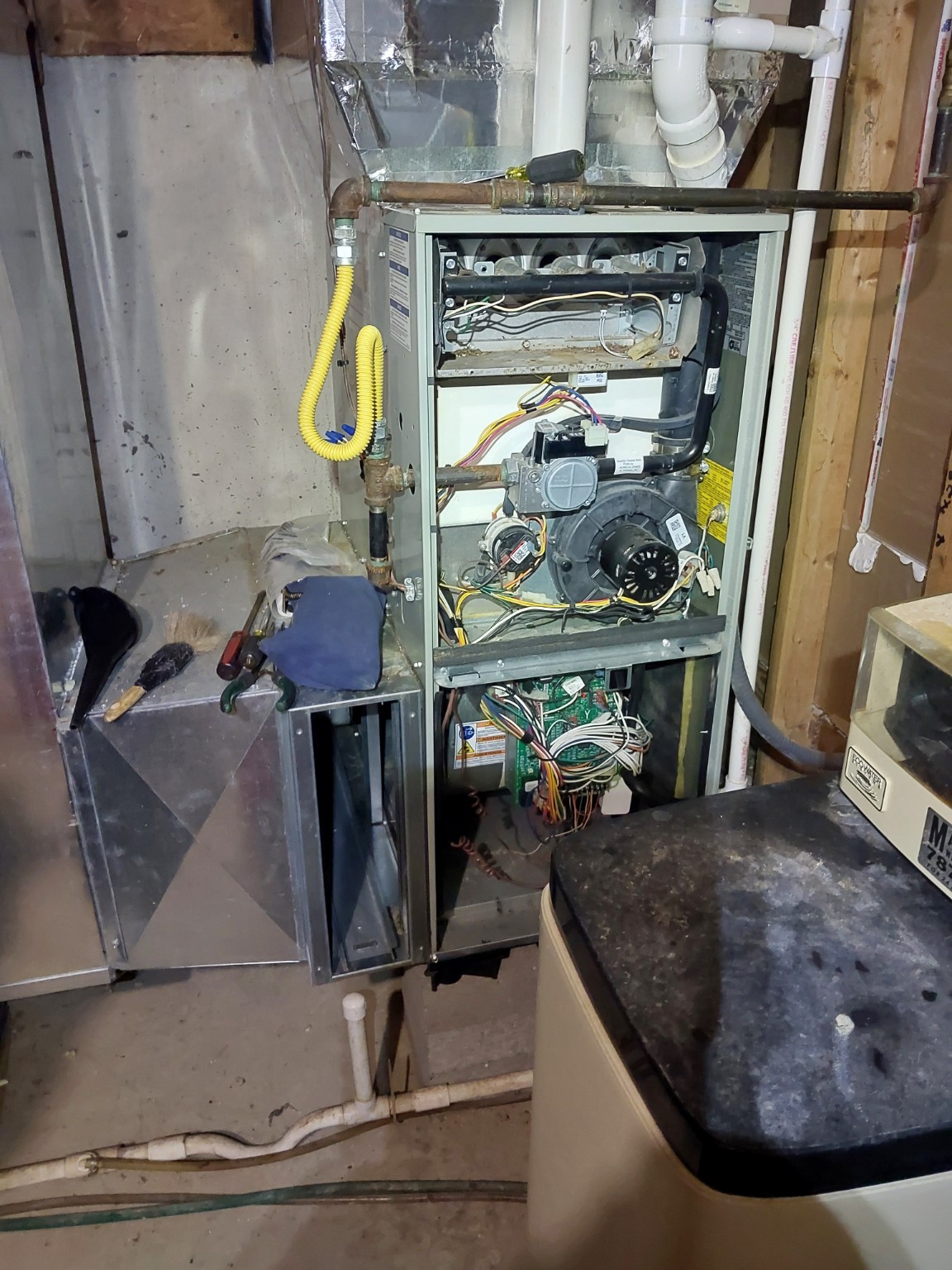
Photo: Authentic HHC field photograph of an open furnace during inspection, used to illustrate heating equipment. It does not depict or prove the cause of a cold-air complaint.
For help beyond these tips, explore our heating and cooling services or request an HVAC assessment.
Thanks for reading. Check back with our family for more practical ideas to help care for your home.